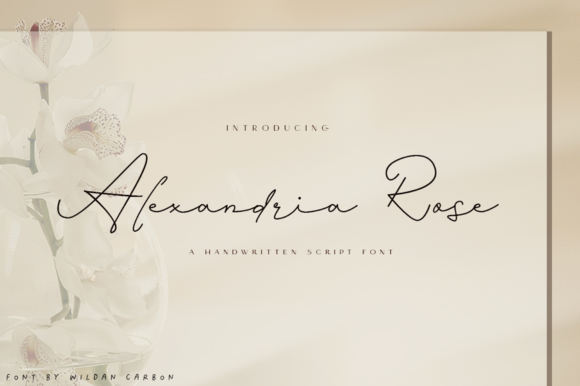
Alexandria Rose: A Thin, Elegant Script Font for Handmade Creators
As someone who designs printable wall art, cuts vinyl stickers for small-batch candles, and hand-illustrates wedding welcome boards, I’ve learned that the right script font isn’t just decorative—it’s a quiet salesperson. Alexandria Rose is exactly that kind of font: thin, graceful, and effortlessly elegant—without sacrificing clarity or craft-friendly functionality.
Alexandria Rose lives in the sweet spot between refined and approachable. Its fine strokes flow with gentle contrast and subtle terminal flares—not overly ornate, not too casual. It feels handwritten, but with consistent rhythm and spacing that makes it far more reliable than many free script fonts when cutting on a Cricut or Silhouette. I’ve used it for everything from boutique gift tags to farmhouse-style wooden signs—and every time, customers comment on how “soft yet polished” the text looks.
Where Alexandria Rose Shines in Physical & Printable Products
This script font excels where elegance meets legibility—especially at small-to-medium sizes. Here’s where it works best in real-world making:
- Candle and soap labels: On kraft paper or matte sticker stock, Alexandria Rose adds artisanal warmth without looking fussy. Its thin weight keeps ink coverage low, reducing bleed on porous surfaces.
- Wedding stationery: From save-the-dates to menu cards and acrylic place cards, Alexandria Rose delivers timeless charm. It pairs beautifully with minimalist layouts—no need to over-design when the typeface carries the tone.
- Printable planner pages and habit trackers: Unlike dense scripts that blur when printed at 8 pt, Alexandria Rose remains readable in headers and section titles—even on budget printer paper.
- Digital downloads & SVG bundles: Because it’s designed with clean vector paths, Alexandria Rose scales flawlessly for layered cut files. No jagged edges, no unexpected gaps between letters—even with swashes enabled.
- Seasonal product packaging: I used it last December for holiday cookie box labels (paired with a warm sans serif for ingredients). The contrast felt festive but never childish—and it translated perfectly across mockups, printed boxes, and Instagram story previews.
Readability Tips for Makers & Small-Batch Sellers
Alexandria Rose is a display font—not meant for long paragraphs—but it holds up remarkably well in short-form applications. For physical products, keep these practical tips in mind:
- Use it at 14 pt or larger for printed greeting cards and invitations; below 10 pt, some letterforms (like the lowercase g or y) begin to lose definition on uncoated stock.
- For vinyl or iron-on transfers, avoid tight kerning on curved surfaces—test cut a sample first. The font includes optional swashes and ligatures, but I reserve those for headlines only, not product tags where space is tight.
- When exporting for printables, always use the OpenType (.OTF) version—it preserves stylistic alternates and ensures consistent rendering across Adobe apps, Canva, and Affinity Designer.
- On light-colored mugs or tote bags, pair Alexandria Rose with a mid-gray or charcoal instead of pure black for softer contrast and better perceived luxury.
Smart Pairings That Elevate Your Brand Consistency
Alexandria Rose sings brightest when balanced with a grounded companion. As a Script Amp font, it’s built to harmonize—not compete—with supporting typefaces. My go-to pairings:
- Clean sans serif (e.g., Montserrat, Poppins, or Inter): Use for body text, ingredient lists, care instructions, or website buttons. The contrast reinforces professionalism while letting Alexandria Rose shine as your brand’s expressive voice.
- Subtle serif (e.g., Lora or Playfair Display): Great for vintage-inspired labels or apothecary-style packaging—adds texture without overwhelming the script’s delicacy.
- Avoid pairing with other scripts: Unless you’re intentionally designing high-end monogrammed stationery, two expressive fonts tend to cancel each other out visually. Keep it simple: one voice, one mood.
Licensing, Formats & Real-World Fit
Alexandria Rose comes in standard desktop formats (.OTF and .TTF), with full support for Latin-based languages—enough for English, Spanish, French, and German product labels and digital downloads. It includes basic OpenType features: discretionary ligatures, contextual alternates, and swash capitals—ideal for customizing quotes or monograms in templates.
Crucially, its commercial license covers all the ways makers actually sell: physical product labels, SVG files for crafters, printable planners, client-branded invitations, and even merchandise like mugs or shirts—no extra fees or attribution required. Just be sure to check the license terms before bundling it into editable Canva templates you sell (some platforms require extended licensing for template resale).
Why This Script Font Feels Like a Craft Supply, Not Just a Download
I don’t stock fonts the way I stock washi tape—I only keep ones that solve problems. Alexandria Rose solves three: it adds quiet sophistication to handmade goods, it cuts cleanly on home machines, and it reads warmly at real-world sizes. It doesn’t shout. It invites. And in a marketplace crowded with bold, trendy fonts, that kind of thoughtful restraint is rare—and commercially valuable.
Whether you're pressing foil onto wedding envelopes, designing a Shopify banner for your candle shop, or prepping a bundle of Valentine’s Day SVGs, Alexandria Rose gives your work a consistent, elevated signature—without asking for extra design labor. It’s not flashy. It’s faithful. And for small shop owners who value both beauty and buildability, that’s exactly what a great script font should be.